jardimseco

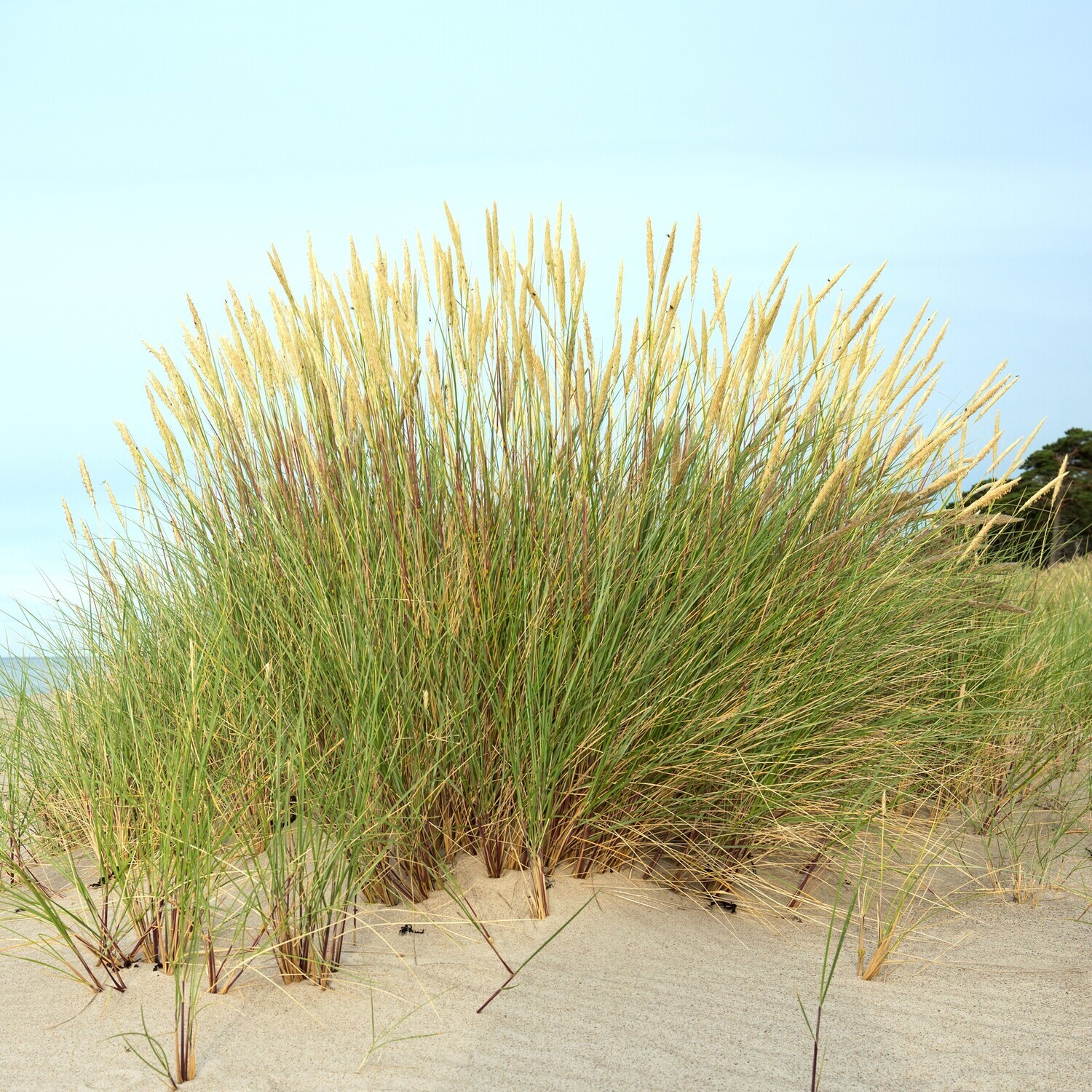
Ammophila arenaria, Marram grass grows on coastal sand dunes all over the world, however it is only native to the coastlines, particularly the beaches, of Europe and North Africa. It will grow in pure sand and can tolerate acid and alkaline soils (a range of pH 4,5–9). It prefers well-drained soils low in organic matter. As a xerophytic (surviving in an environment with little liquid water) adaptation, its leaves curl during periods of drought. It is a perennial grass, forming stiff, hardy clumps of erect stems up to 1.2 metres in height. It grows from a network of thick rhizomes, which give it a sturdy anchor in a sand substrate. Furthermore, it can also be buried and will grow upwards as sand or soil accumulates over the plant.
Marram grass has acquired a reputation as an engineering tool, as a land reclamation plant, however there is no reason why this grass can't be used in the garden as a tough ornamental, using it as a feature or as part of a reclamation mix, particularly if you have difficult free draining and very dry soil. Of course, if you need to stabilise a soil or embankment, this plant should do the trick. Like all grasses, it will need old growth cleaning out now and again.
Some more information
Como usar nossa loja online
-
Pode fazer uma encomenda seleccionando plantas com quantidades e colocando-as no seu saco de compras.
-
Ao fazer uma encomenda, não é obrigado a comprar as plantas online e não lhe será pedido qualquer pagamento nesta fase..
-
Confirmaremos consigo os preços, disponibilidade e datas de entrega/colheita por e-mail.
-
Só quando todos os detalhes da sua encomenda forem acordados, lhe enviaremos uma Factura/factura acordada e lhe solicitaremos o pagamento.
-
Assim que uma encomenda for acordada, exigimos um pagamento de 50% para assegurar as plantas. As plantas no cesto de compras não são reservadas até que uma encomenda seja efectuada
-
Disponibilidade - a loja contém 3 categorias de disponibilidade
-
Plantas prontas para envio, coleta em 14 dias
-
Plantas que temos mas que ainda estão a crescer nos seus contentores. Estas são oferecidas para reserva e serão libertadas assim que estiverem prontas. É fornecida uma data estimada para a sua disponibilidade.
-
Plantas de que apenas temos um stock limitado, ou que só nos propagamos ocasionalmente ou a pedido. Isto também inclui plantas que vamos propagar num futuro próximo.
-
Leia mais sobre a disponibilidade de nossa planta e pedidos antecipados aqui