top of page
Verbena bonariensis.jpg

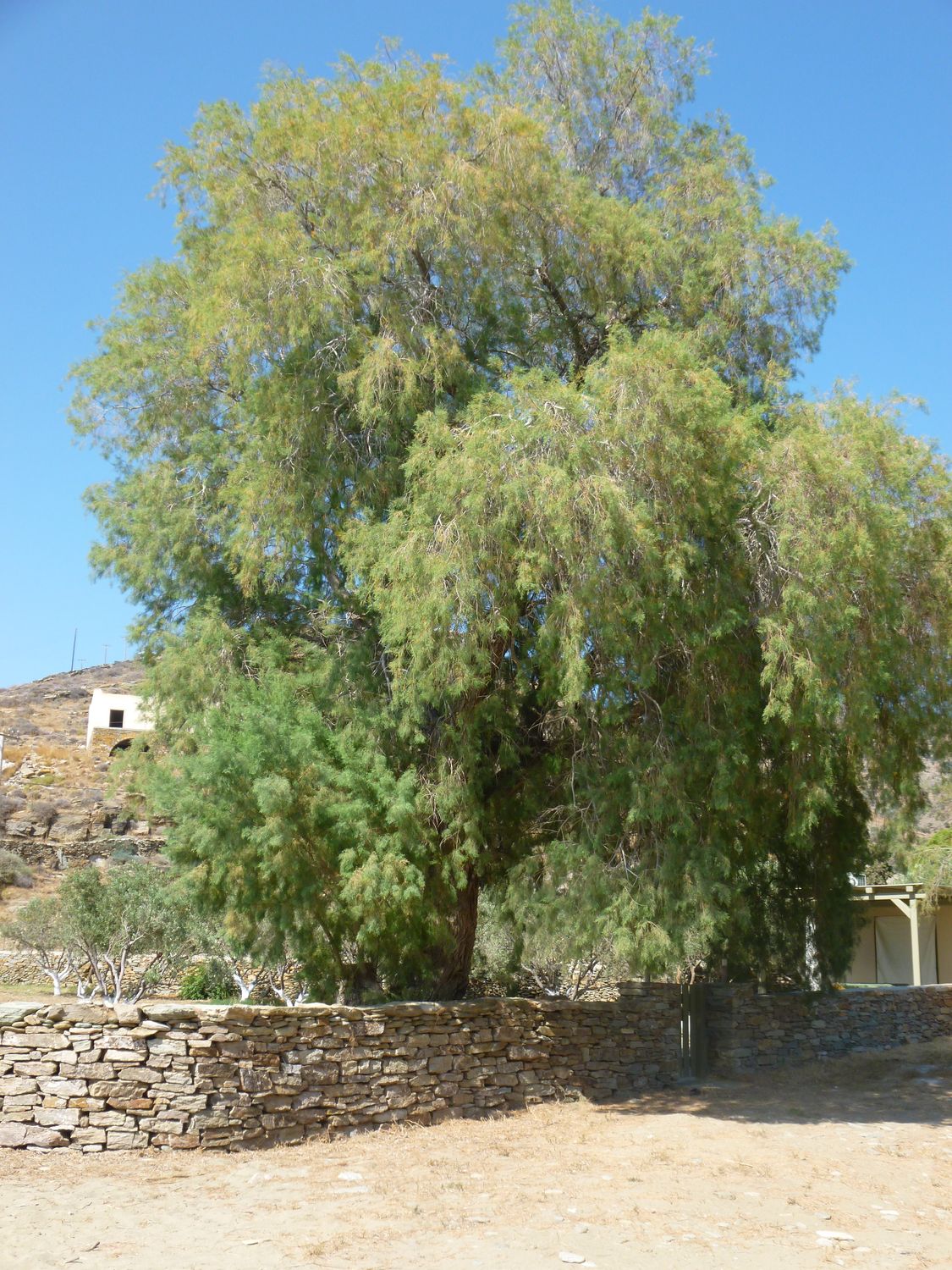
Tamarix aphylla

SKU 1635
€9,01
Sold Out
Price incl. 6% IVA (6%) €0,51
Plants in stock now
Size options
Production or collection dates
Sold Out
Save this product for later
Share this product with your friends
Tamarix aphylla
Plant Details
Plant Type: Tree
Aspect: Hedges or coastal windbreaks
Foliage: Fine and soft
Growth form: Tree
Size - height & spread : 10 metres
Soil type/requirements: Poor dry soils
Water requirements (established plants): Natural rainfall
Native Distribution: Africa and Middle East
Tamarix aphylla, commonly known as the Athel tamarisk, Athel tree or Athel pine, is the largest species in the Tamarix genus and can grow up to 18 metres tall. This evergreen tree is native to arid regions across much of Africa, the Middle East, and parts of Western and Southern Asia, with its range continuing through the Arabian Peninsula, Iran, Pakistan, Afghanistan, and India.


The Athel tamarisk thrives alongside desert watercourses, is highly tolerant of alkaline soils and can survive in extremely saline conditions. It has a deep taproot system that extends up to 10 metres vertically and 34 metres horizontally, enhancing its drought resistance and stability in arid soils. This root system is also why the tree is used to stabilise soils affected by coastal or rainwater erosion. The tree is also used as a windbreak and shade tree in agriculture and horticulture, particularly in dry and coastal regions. It is successfully used as a street tree in southern Spain and north Africa, particularly in areas exposed to the sea. Once established, they are also frost-tolerant, so providing them with a little shelter in the first few years will help them survive cold winters.

More information.....and it's not a conifer
Tamarix aphylla is often mistaken for a conifer, leading to its common name of Athel pine. The tree has slender, drooping branches with tiny, scale-like leaves that grow alternately along the stems, giving it a pine-like appearance. The leaves are often encrusted with salt secretions, which can form a visible crust on the leaf surface. These secretions are excreted to manage internal salt levels. The bark of young branches is reddish-brown and smooth, becoming grey-brown, thick and deeply furrowed with age. Small, pink to white blooms appear in dense, drooping racemes from July to November, followed by small capsules containing numerous tiny, wind-dispersed seeds.


The tree has a long history of ethnobotanical use. Its bark is used to treat skin diseases, and the galls on its flowers act as astringents. It also exhibits a variety of pharmacological activities that support its traditional uses, and the nectar from its flowers produces high-quality honey with a distinctive flavour.


Como usar nossa loja online

  • Pode fazer uma encomenda seleccionando plantas com quantidades e colocando-as no seu saco de compras.

  • Ao fazer uma encomenda, não é obrigado a comprar as plantas online e não lhe será pedido qualquer pagamento nesta fase..

  • Confirmaremos consigo os preços, disponibilidade e datas de entrega/colheita por e-mail.

  • Só quando todos os detalhes da sua encomenda forem acordados, lhe enviaremos uma Factura/factura acordada e lhe solicitaremos o pagamento.

  • Assim que uma encomenda for acordada, exigimos um pagamento de 50% para assegurar as plantas. As plantas no cesto de compras não são reservadas até que uma encomenda seja efectuada

​​

  • Disponibilidade - a loja contém 3 categorias de disponibilidade

​​

  • Plantas prontas para envio, coleta em 14 dias

  • Plantas que temos mas que ainda estão a crescer nos seus contentores. Estas são oferecidas para reserva e serão libertadas assim que estiverem prontas. É fornecida uma data estimada para a sua disponibilidade.

  • Plantas de que apenas temos um stock limitado, ou que só nos propagamos ocasionalmente ou a pedido. Isto também inclui plantas que vamos propagar num futuro próximo.

​​

​

bottom of page