jardimseco

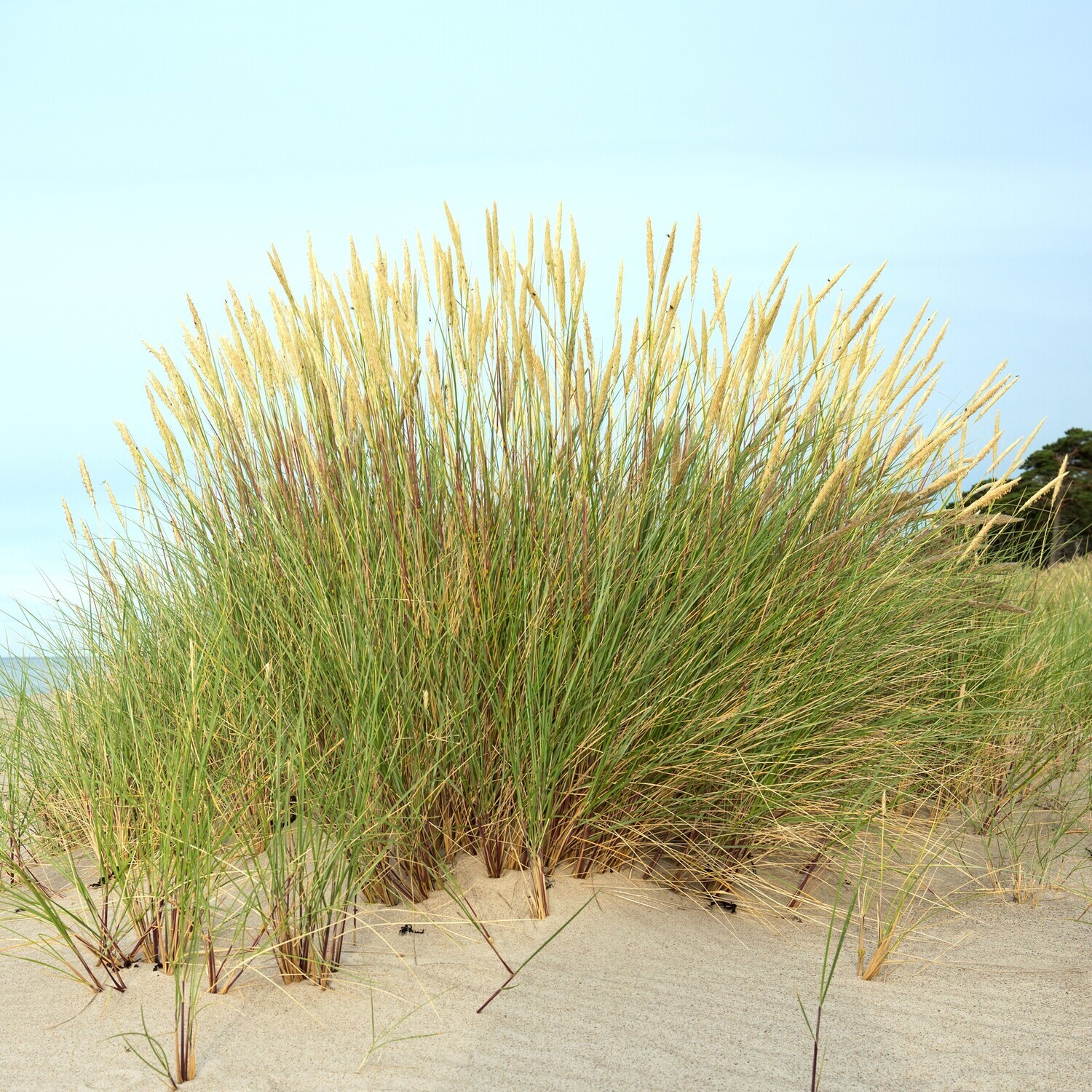
Ammophila arenaria, Marram grass grows on coastal sand dunes all over the world, however it is only native to the coastlines, particularly the beaches, of Europe and North Africa. It will grow in pure sand and can tolerate acid and alkaline soils (a range of pH 4,5–9). It prefers well-drained soils low in organic matter. As a xerophytic (surviving in an environment with little liquid water) adaptation, its leaves curl during periods of drought. It is a perennial grass, forming stiff, hardy clumps of erect stems up to 1.2 metres in height. It grows from a network of thick rhizomes, which give it a sturdy anchor in a sand substrate. Furthermore, it can also be buried and will grow upwards as sand or soil accumulates over the plant.
Marram grass has acquired a reputation as an engineering tool, as a land reclamation plant, however there is no reason why this grass can't be used in the garden as a tough ornamental, using it as a feature or as part of a reclamation mix, particularly if you have difficult free draining and very dry soil. Of course, if you need to stabilise a soil or embankment, this plant should do the trick. Like all grasses, it will need old growth cleaning out now and again.
Some more information
How to use our online shop
-
You can make an order by selecting plants with quantities and putting them in your Shopping Bag.
-
By placing an order you are not obligated to purchase the plants online and you will not be asked for any payment at this stage.
-
We will confirm prices, availability and delivery/collection dates with you by email.
-
Only when all the details of your order are agreed, will we send you an agreed Factura/Invoice and request payment from you.
-
Once an order is agreed we require a 50% payment to secure the plants. Plants in the shopping basket are not reserved until an order is placed.
-
Availability - the store contains 3 availability categories
-
Plants ready for despatch, collection within 14 days
-
Plants we have but they are still growing into their containers. These are offered for reservation and will be released once they are ready. An estimated date for their availability is given.
-
Plants that we only hold a limited stock of, or only propagate occasionally or on demand. This also includes plants we are going to propagate in the near future.
-
Read more on our plant availability and advance orders here