top of page
Verbena bonariensis.jpg

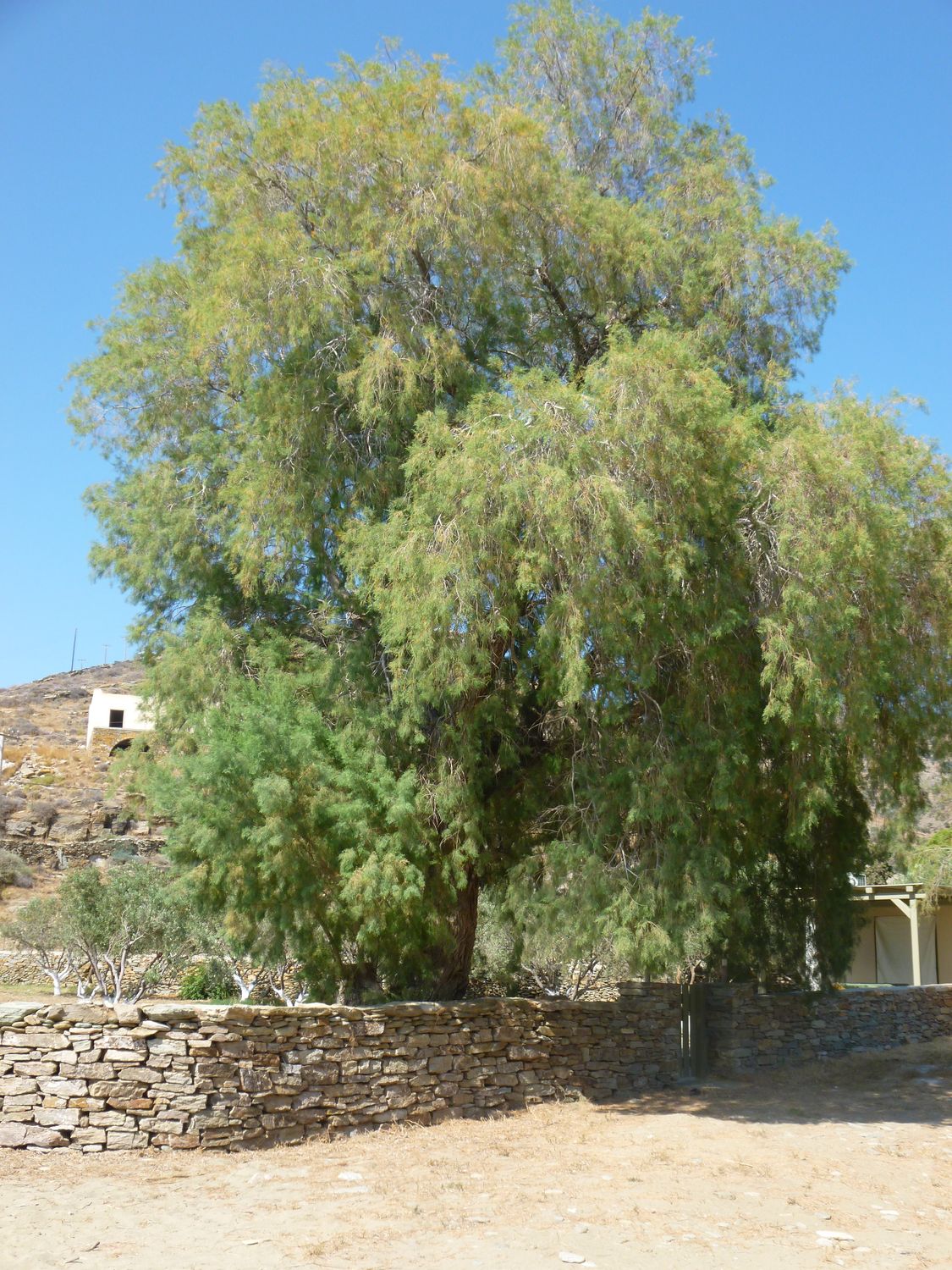
Tamarix aphylla

SKU 1635
€9,01
Sold Out
Price incl. 6% IVA (6%) €0,51
Plants in stock now
Size options
Production or collection dates
Sold Out
Save this product for later
Share this product with your friends
Tamarix aphylla
Plant Details
Plant Type: Tree
Aspect: Hedges or coastal windbreaks
Foliage: Fine and soft
Growth form: Tree
Size - height & spread : 10 metres
Soil type/requirements: Poor dry soils
Water requirements (established plants): Natural rainfall
Native Distribution: Africa and Middle East
Tamarix aphylla, commonly known as the Athel tamarisk, Athel tree or Athel pine, is the largest species in the Tamarix genus and can grow up to 18 metres tall. This evergreen tree is native to arid regions across much of Africa, the Middle East, and parts of Western and Southern Asia, with its range continuing through the Arabian Peninsula, Iran, Pakistan, Afghanistan, and India.


The Athel tamarisk thrives alongside desert watercourses, is highly tolerant of alkaline soils and can survive in extremely saline conditions. It has a deep taproot system that extends up to 10 metres vertically and 34 metres horizontally, enhancing its drought resistance and stability in arid soils. This root system is also why the tree is used to stabilise soils affected by coastal or rainwater erosion. The tree is also used as a windbreak and shade tree in agriculture and horticulture, particularly in dry and coastal regions. It is successfully used as a street tree in southern Spain and north Africa, particularly in areas exposed to the sea. Once established, they are also frost-tolerant, so providing them with a little shelter in the first few years will help them survive cold winters.

More information.....and it's not a conifer
Tamarix aphylla is often mistaken for a conifer, leading to its common name of Athel pine. The tree has slender, drooping branches with tiny, scale-like leaves that grow alternately along the stems, giving it a pine-like appearance. The leaves are often encrusted with salt secretions, which can form a visible crust on the leaf surface. These secretions are excreted to manage internal salt levels. The bark of young branches is reddish-brown and smooth, becoming grey-brown, thick and deeply furrowed with age. Small, pink to white blooms appear in dense, drooping racemes from July to November, followed by small capsules containing numerous tiny, wind-dispersed seeds.


The tree has a long history of ethnobotanical use. Its bark is used to treat skin diseases, and the galls on its flowers act as astringents. It also exhibits a variety of pharmacological activities that support its traditional uses, and the nectar from its flowers produces high-quality honey with a distinctive flavour.


How to use our online shop

  • You can make an order by selecting plants with quantities and putting them in your Shopping Bag.

  • By placing an order you are not obligated to purchase the plants online and you will not be asked for any payment at this stage.

  • We will confirm prices, availability and delivery/collection dates with you by email.

  • Only when all the details of your order are agreed, will we send you an agreed Factura/Invoice and request payment from you.

  • Once an order is agreed we require a 50% payment to secure the plants. Plants in the shopping basket are not reserved until an order is placed.

​​

  • Availability - the store contains 3 availability categories

​​

  • Plants ready for despatch, collection within 14 days

  • Plants we have but they are still growing into their containers. These are offered for reservation and will be released once they are ready. An estimated date for their availability is given.

  • Plants that we only hold a limited stock of, or only propagate occasionally or on demand. This also includes plants we are going to propagate in the near future.

​​

​

bottom of page